Echo in the Static
CTF writeup for Echo in the Static: recovering an AES-256-GCM encrypted flag from a passphrase hidden in the challenge title, then decoding audio steganography.
Category: Cryptography | Difficulty: Medium | Tools: CyberChef
Challenge Overview
This challenge presented a ciphertext string segmented by $ delimiters, each field encoding a specific cryptographic parameter. The objective was to identify the encryption scheme, recover the decryption key from a hidden hint embedded in the challenge title, and ultimately extract the plaintext flag from an audio file.
Extracted Cryptographic Parameters
| Parameter | Value | Description |
|---|---|---|
| Algorithm | AES-256-GCM | Authenticated symmetric encryption |
| KDF | PBKDF2-HMAC-SHA256 | Key derivation from passphrase |
| Iterations | 200000 | PBKDF2 hashing rounds |
| Salt | c17032827dd15692570ffe18fc2a335d | Hex-encoded PBKDF2 salt |
| IV | 0b6cf7d91c0a215d62e19394 | AES-GCM Initialization Vector |
| Auth Tag | 0644f2e6f068a1bc34bdd20999832cba | GCM authentication tag |
| Passphrase | echoes-in-the-static | Hidden in the challenge title |
Solution Walkthrough
Step 1 — Identify the Encryption Scheme
The ciphertext string was divided into distinct fields by $ separators. Reading each field revealed a standard format: algorithm · KDF · iterations · salt · IV · auth tag · ciphertext. The identifier AES-256-GCM confirmed authenticated symmetric encryption was in use.
Step 2 — Recover the Passphrase
The passphrase field displayed the message "No clue for you" — an intentional red herring. The actual key was concealed in the challenge title itself: echoes-in-the-static. Hiding secrets in challenge metadata is a classic CTF technique worth recognising.
Step 3 — Derive the AES-256 Key via PBKDF2
With the passphrase recovered, it was stretched into a 256-bit AES key using PBKDF2-HMAC-SHA256 in CyberChef’s Derive PBKDF2 Key operation:
| Field | Value |
|---|---|
| Passphrase | echoes-in-the-static (UTF-8) |
| Key Size | 256 bits |
| Iterations | 200000 |
| Hash Func | SHA-256 |
| Salt | c17032827dd15692570ffe18fc2a335d (Hex) |
Derived Key:
4f3c9c1037d7857356634b0a674d721e60406506385c20d809b7a752cd15cf61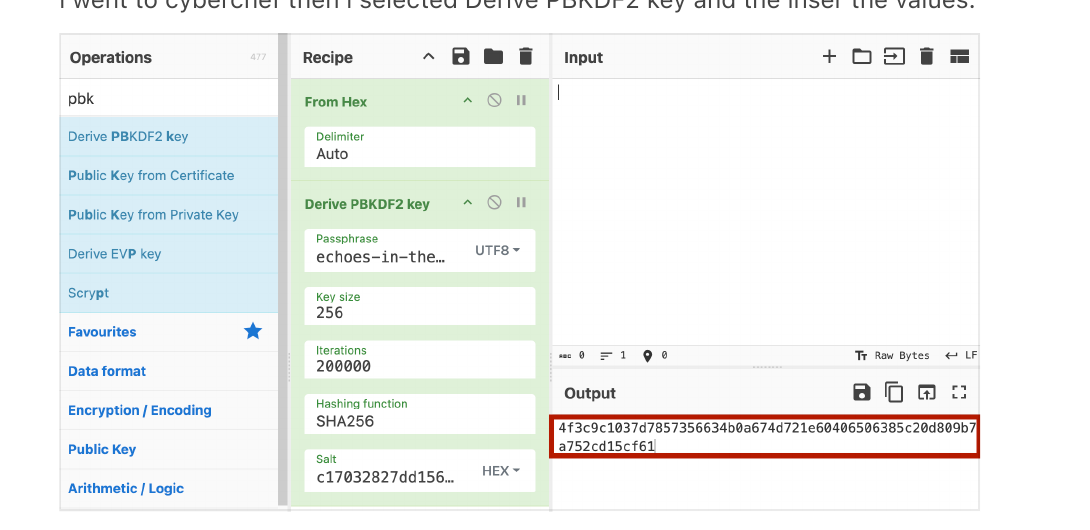
Step 4 — Decrypt the Ciphertext with AES-256-GCM
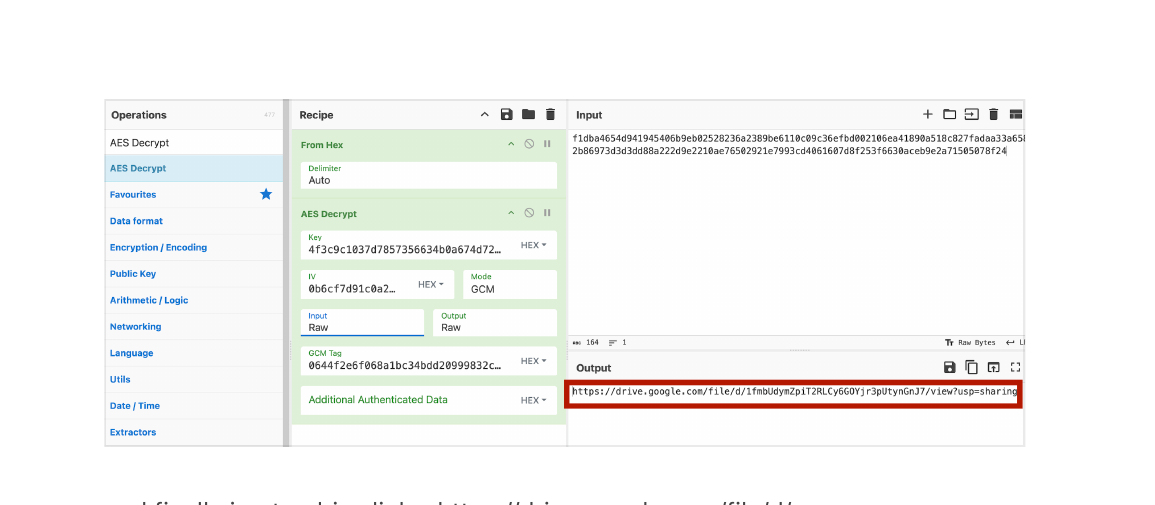
The derived key was fed into CyberChef’s AES Decrypt operation in GCM mode. Supplying the correct IV and authentication tag successfully verified integrity and produced the plaintext.
| Field | Value |
|---|---|
| Key | 4f3c9c1037d7857356634b0a674d721e60406506385c20d809b7a752cd15cf61 |
| IV | 0b6cf7d91c0a215d62e19394 |
| Mode | GCM |
| Tag | 0644f2e6f068a1bc34bdd20999832cba |
| Output | https://drive.google.com/file/d/1fmbUdymZpiT2RLCy6GOYjr3pUtynGnJ7/view |
Step 5 — Retrieve and Analyse the Audio File
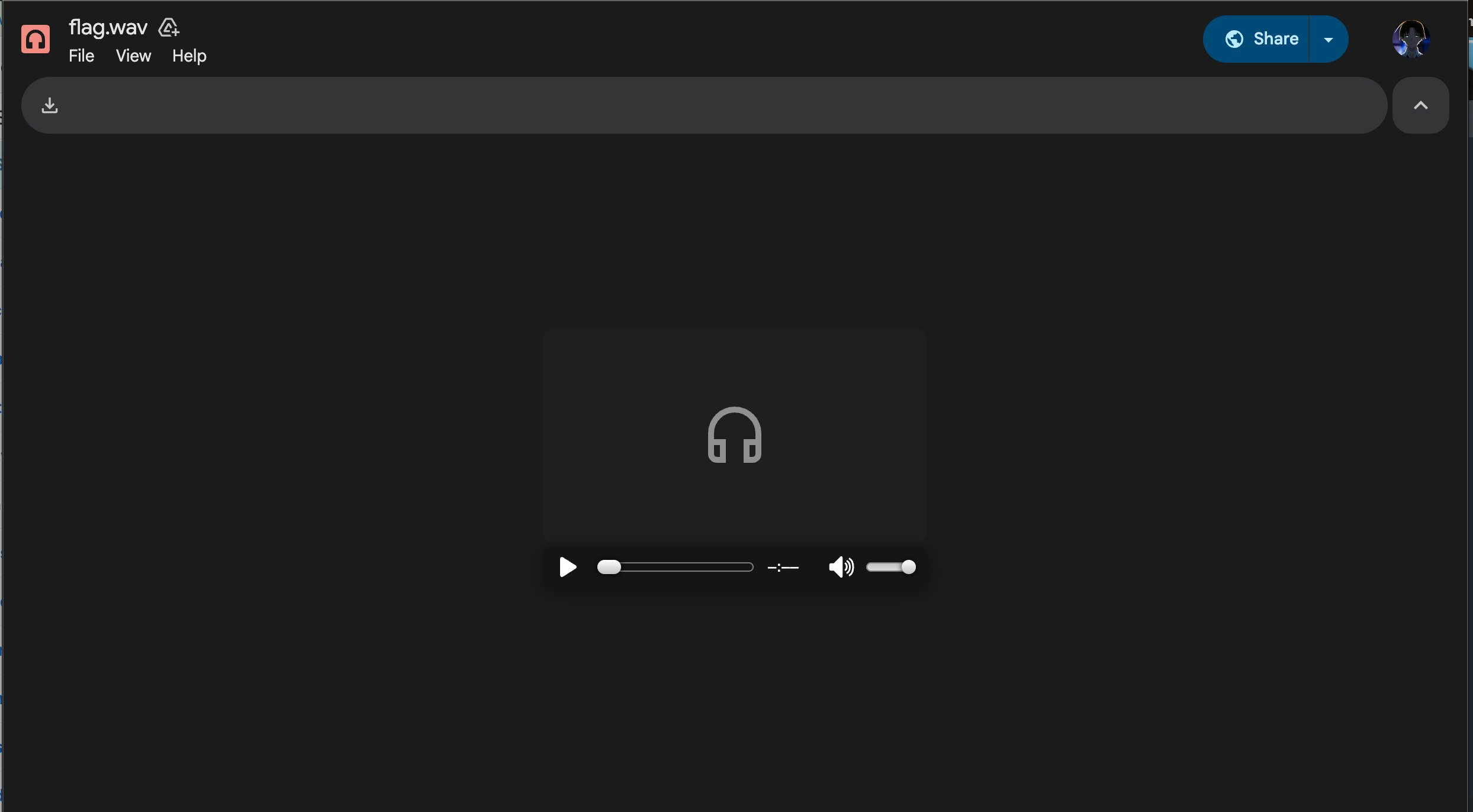
The decrypted plaintext contained a Google Drive link hosting flag.wav. The file played a distorted, radio-static-style voice — thematically consistent with “Echo in the Static”. Careful listening revealed the spoken flag encoded in leet-speak.
Flag
HAAT{W0W_Y0U_R3411Y_1157N3D}Key Takeaways
| Concept | Notes |
|---|---|
| AES-256-GCM | Provides both confidentiality and integrity. The auth tag must be correct or decryption fails. |
| PBKDF2 | A computationally expensive KDF designed to slow brute-force attacks. High iteration counts are intentional. |
| Steganographic Hints | CTF titles, descriptions, and flavour text frequently conceal passphrases — read everything carefully. |
| CyberChef | An indispensable browser-based toolkit for chaining cryptographic operations without writing code. |